28 Aug 2026 By: Faizan Khan
For years, Managed Service Providers (MSPs) have helped businesses manage the technology they rely on every day, from networks and connectivity to cloud services, cybersecurity and IT support.
But as customer expectations evolve, there is an opportunity for MSPs to look beyond IT infrastructure and into the physical environments where their customers work.
IoT is opening the door to a new generation of managed services, helping MSPs give customers greater visibility of their buildings, improve workplace wellbeing, reduce operational costs and make smarter decisions.
Most importantly, it can create a new source of recurring revenue for MSPs.

The workplace has changed significantly. Hybrid working, return-to-office initiatives and an increased focus on employee experience mean businesses are thinking differently about the environments they provide for their staff.
At the same time, organisations are under pressure to control costs, improve energy efficiency and demonstrate progress against sustainability and environmental targets.
This creates several key drivers for investment in smarter buildings.
Employees expect comfortable, healthy environments when they are in the workplace. Temperature, air quality, humidity and occupancy can all contribute to the overall experience within a building.
There is growing evidence that indoor environmental conditions can affect cognitive performance. Research from Harvard's Healthy Buildings programme has linked indoor air quality and ventilation with cognitive function, highlighting the potential impact the physical working environment can have on employees.
The same principles apply within schools and educational institutions, where indoor environmental conditions can directly affect how comfortable and productive occupants feel.
For an example of IoT being used in an educational environment, take a look at our East Renfrewshire case study.
Creating spaces that are optimised for occupant wellbeing can therefore deliver positive outcomes for employees, building managers and the wider organisation.

Businesses are increasingly expected to demonstrate how they are reducing their environmental impact.
IoT can provide the data needed to understand building performance, monitor resource use and demonstrate improvements over time.
Rather than relying on occasional manual readings, organisations can access a continuous stream of information from across their buildings, making it easier to identify inefficiencies and understand how spaces are performing.
Building owners and occupiers may also need to demonstrate that their environments meet certain standards or requirements.
Certifications and frameworks such as WELL and BREEAM place greater emphasis on factors including health, wellbeing, energy efficiency and overall building performance.
Having access to reliable, ongoing environmental data can make it easier for organisations to monitor conditions, identify areas for improvement and support reporting requirements.
IoT turns the physical environment into data that can be monitored, analysed and acted upon.
For MSPs, this creates an opportunity to add environmental and building monitoring to their existing portfolio of managed services.
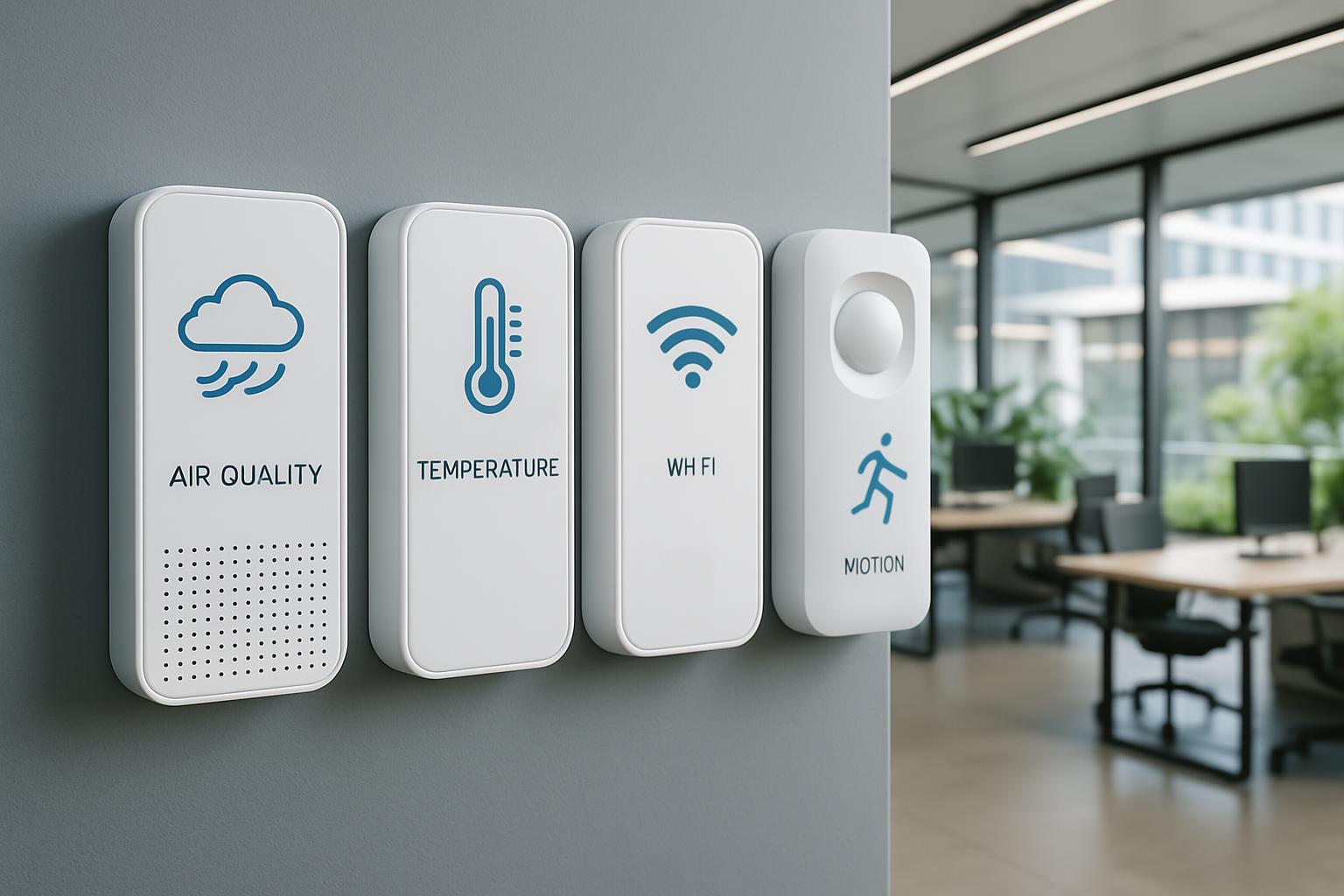
CO2 sensors can identify poorly ventilated areas and help organisations understand when indoor CO2 concentrations begin to rise.
This can be particularly valuable for MSPs working with schools and educational environments, where maintaining appropriate ventilation can support concentration, comfort and overall indoor environmental quality.
Indoor air quality sensors can monitor environmental conditions that may affect workplace comfort and wellbeing.
Research from the Harvard T.H. Chan School of Public Health has found associations between indoor air quality, ventilation and cognitive performance, reinforcing the value of maintaining healthier indoor environments.
Read the Harvard research on office air quality and cognitive performance
Temperature monitoring can help identify areas that are too hot or too cold, supporting more effective HVAC operation and improving occupant comfort.
Humidity monitoring can help organisations understand conditions that may affect occupant comfort, building materials and indoor environmental quality.
Occupancy sensors can help organisations understand how desks, meeting rooms and shared spaces are actually being used.
This information can support space optimisation, workplace planning and better-informed decisions about how buildings are operated.
Water leak sensors can detect leaks early and alert teams before a relatively small issue develops into costly damage.
For an MSP, this can also create an opportunity to become more closely involved in a customer's facilities operations, helping strengthen the wider client relationship.
The opportunity is not simply to sell a sensor.
The real opportunity is to turn IoT into a managed service.
MSPs can provide customers with ongoing monitoring of workplace and building conditions through dashboards, alerts and regular reporting.
For MSPs working with organisations that manage buildings or estates, IoT creates an opportunity to become more deeply involved in facilities and operational management.
An MSP could provide customers with:

This is where IoT becomes particularly interesting for MSPs.
The conversation with a customer can move beyond:
"How is your network performing?"
To:
"How is your building performing?"
That change creates opportunities to engage with different stakeholders within the same customer organisation, including facilities managers, estates teams, operations directors and sustainability teams.
You do not necessarily need to build a completely new business model to do it.
IoT can be delivered using the same principles that have already made managed services successful: connectivity, monitoring, automation, support and recurring revenue.
If you're an MSP looking to expand your portfolio, IoT could provide a straightforward way to introduce new managed services while delivering tangible value to your customers.
From environmental sensors and connectivity to dashboards, alerts and ongoing monitoring, Alliot can help you build an IoT proposition around your existing MSP model.
Get in touch today to discuss how we can help you position IoT alongside your existing services.
Wherever you are in your IoT journey, we're here to help you every step of the way.


Certifications